

Super-charge your photography by changing your approach to planning a wedding.
I’m pretty confident that whoever you book as your wedding photographer is going to do their best to give you good photos, whatever happens on your wedding day.
However, there are several decisions that you can make when planning your wedding that could take your photos from being good to downright amazing.
In this blog, I outline what you can do to ensure your wedding photography is not just good but the best it could possibly be.



1. Don’t organise your wedding ceremony for the middle of the day
I always wince a tiny bit when a couple tells me they’ve booked their wedding ceremony in the middle of the day, in the middle of summer. When I say middle of the day, I’m talking about anything from 11am to 1.30pm.
As a wedding photographer, I’m actually quite accomplished at balancing natural light with flash. But in the middle of the day, it’s still a sticky wicket because as powerful as my flash is, it cannot adequately compete with the midday sun on a white dress or exposed areas of skin.
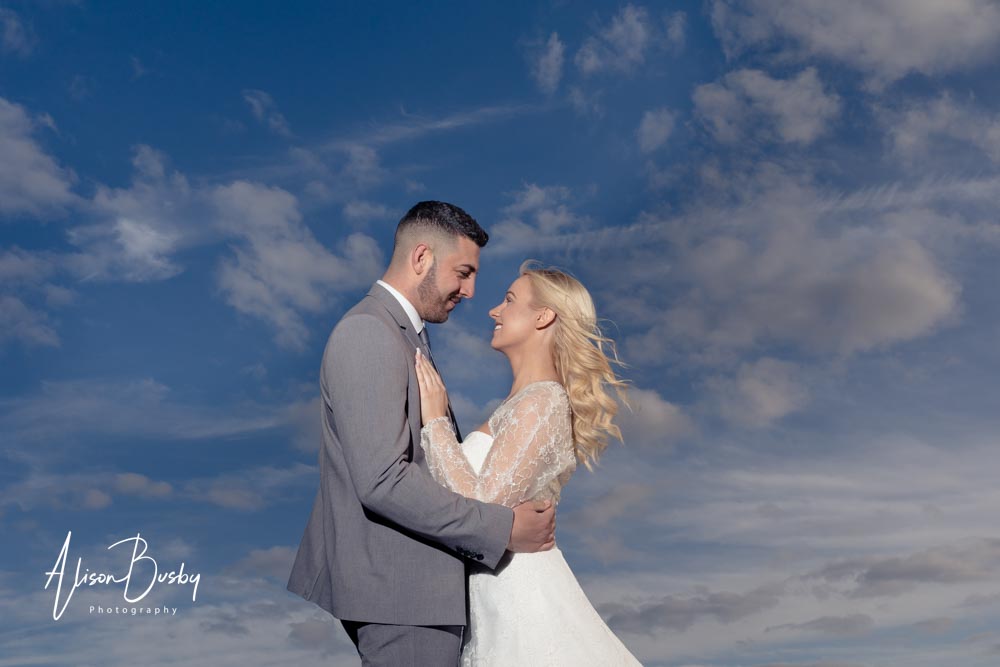
During the summer months, when you’re planning a wedding, a 3-4pm ceremony is much better for photography. 6-7pm would be even better but we don’t tend to have ceremonies at that time in the UK.
Anyway. From 4pm onwards, the light is a becoming more flattering and less intense. Not only that, if you’ve booked coverage of bridal prep to first dance, you’ve got a chance of getting some sunset or twilight photos in there as well because your photographer won’t be starting too early in the day.
A wedding ceremony at 3-4pm is also great for the general flow of the day. For example, if you’re planning a wedding ceremony for 3pm, here’s how it might work from a timing perspective.
- Bridal prep 1pm
- Guest arrival 2.30pm
- Ceremony 3pm
- Confetti 3.30pm
- Drinks reception and any group photos 3.45-4.45pm
- Private couple photos 4.15pm
- Wedding breakfast 5pm
- Evening guest arrival 7.30pm
- Cake and first dance 8pm
- Sunset/twilight photos 8.30pm
2. Spend as much as you can on your venue and decorating it when you’re planning a wedding

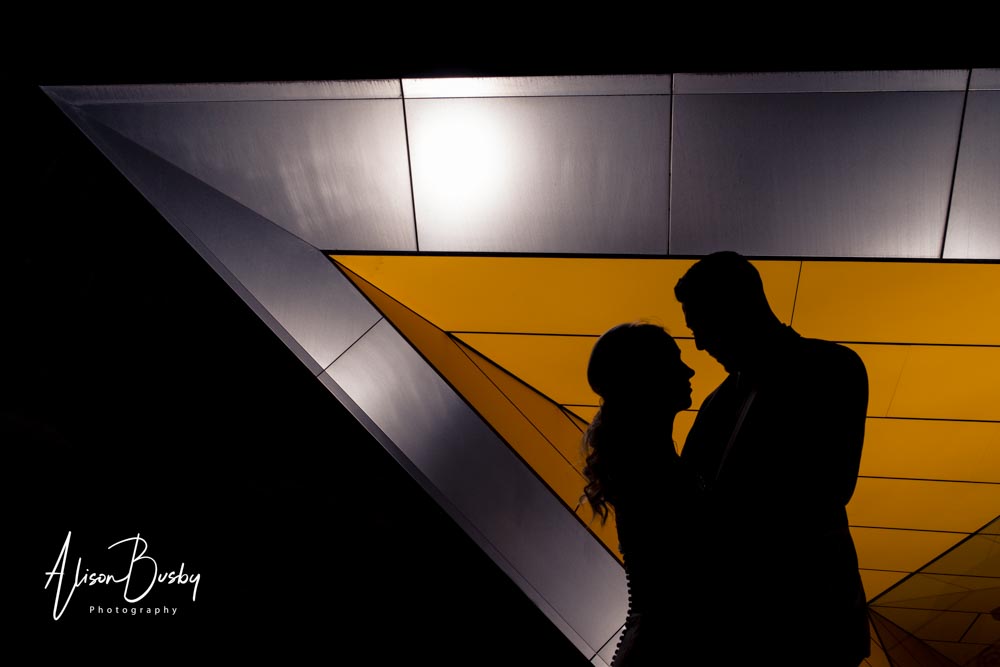
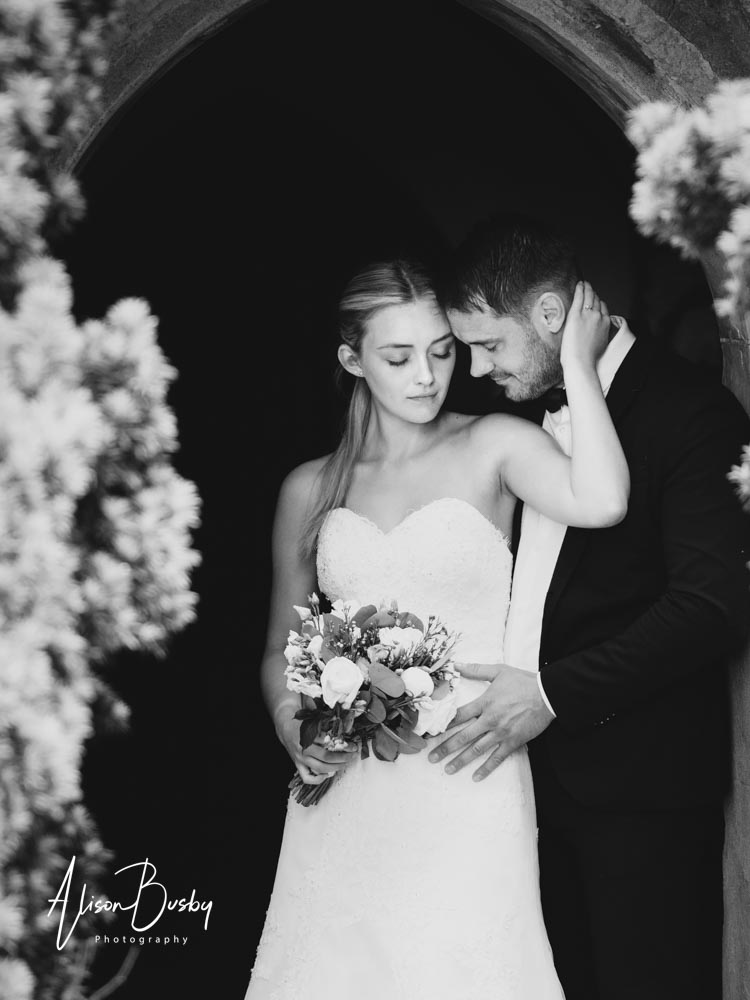
When it comes to planning a wedding, everyone loves a stunning venue and few things will enhance your wedding photography more than some wonderful architecture in the background.

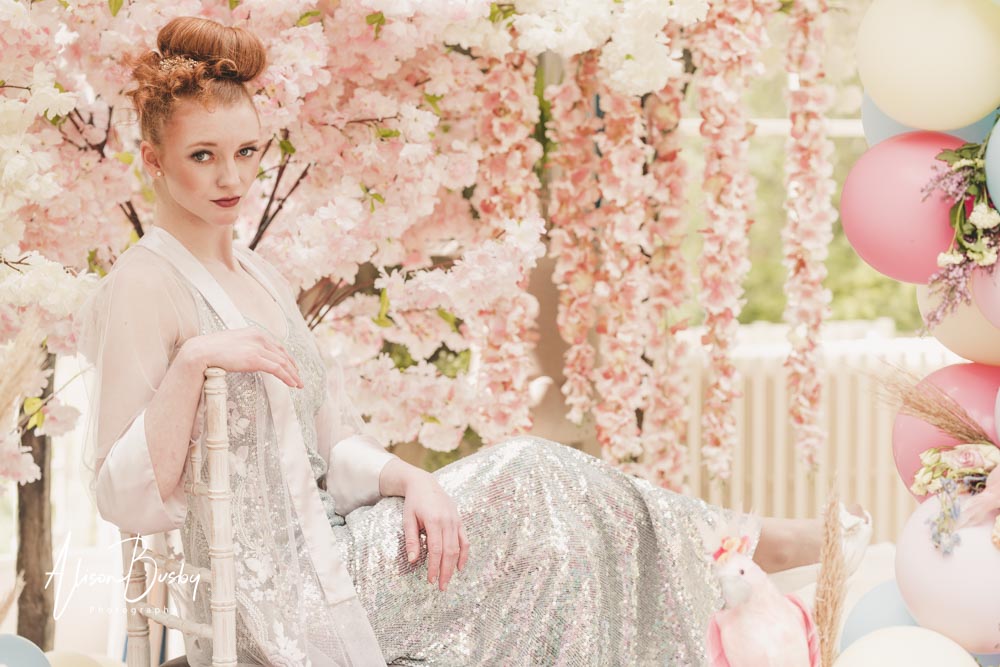
But, if you can’t afford the venue of your dreams (or my dreams), spend as much as you can on beautiful decorations instead. Floral venue decorations are one of the most effective ways to add elegance to a basic wedding venue.
Make no mistake, floral decorations are not cheap but if you concentrate on styling one area (i.e., like in the images above), it’ll be a lot more effective as a wedding photography backdrop than trying to spread it around your venue.

Here are a couple of venue stylists covering Buckinghamshire, Oxfordshire and Berks.
https://www.rebeccamarsala.co.uk/weddings/
https://seventh-heaven-events.co.uk/wedding-flowers-wedding-decor/
If florals are out of the question, you could consider smoke bombs to add colour and drama to your photos. You’ll need permission from your venue as they’re a potentially liability issue. And I’d recommend using them before anyone has a drink. But apart from that, they can be fun.
3. Accept that your wedding dress is going to get dirty
I do understand why you don’t want to get your dress dirty. Certainly, I’d understand if you didn’t want to lie down in mud. But here’s the thing.
If you’re planning a wedding right now, and you want your wedding photographer to capture some unique and amazing wedding photos, you might need to put in a bit of effort to get to the location. And it could be muddy and it could be water-logged. And yes, you are wearing the most expensive dress you’ve ever owned but it’ll be worth it.

Over the years, I’ve concluded that the easiest solution would probably be to choose a style of dress that doesn’t have underlayers so you can actually lift the skirt completely off the ground when you’re walking.
But then your photography is restricting your dress choice so that doesn’t really work either.
In the end, if you want epic photography, you’ve got to decide that you’re not going to fret about the dress. And it helps if you think that way pretty much from the moment you start planning a wedding.
4. Know who pushes your buttons and keep them out of your bridal prep
I once photographed a wedding, where the bridal prep was happening at the grandmother’s house. It was a big house so that was probably a factor in the decision to host bridal prep.
It was absolutely tipping down with rain and the house was full to the gunnels with people, including three or four toddlers racing through the house on toy trucks and scooters. Add to this, the fact that the grandmother had made the wedding cake and was having some problems decorating it, and you’ve got a fairly volatile situation.
At one point, the bride asked her grandmother a question and the grandmother virtually took her head off. The knock-on effect was that a previously relaxed bride ended up in tears and just as stressed as her grandmother.
To tell you the truth, it’s rare to have grandmothers in the bridal prep but my point in mentioning her was just to illustrate how other people’s anxiety is infectious.
It could just as easily be a sister, mother, child or someone else. If you know someone is going to stress you out, don’t have them getting ready with you – put them in another room, you don’t have to be unpleasant about it.
You just have to recognise that not doing it will take away some of the enjoyment for you. Plus, if you’re anxious, it may show in your photos.
Certainly, when you’re planning a wedding, it’s worth thinking about this early on in the process
5. Get ready before your bridesmaids
Yes, please get ready before your bridesmaids. There’s an extremely high probability that you will not be ready before the photographer has to leave if you don’t get ready first.
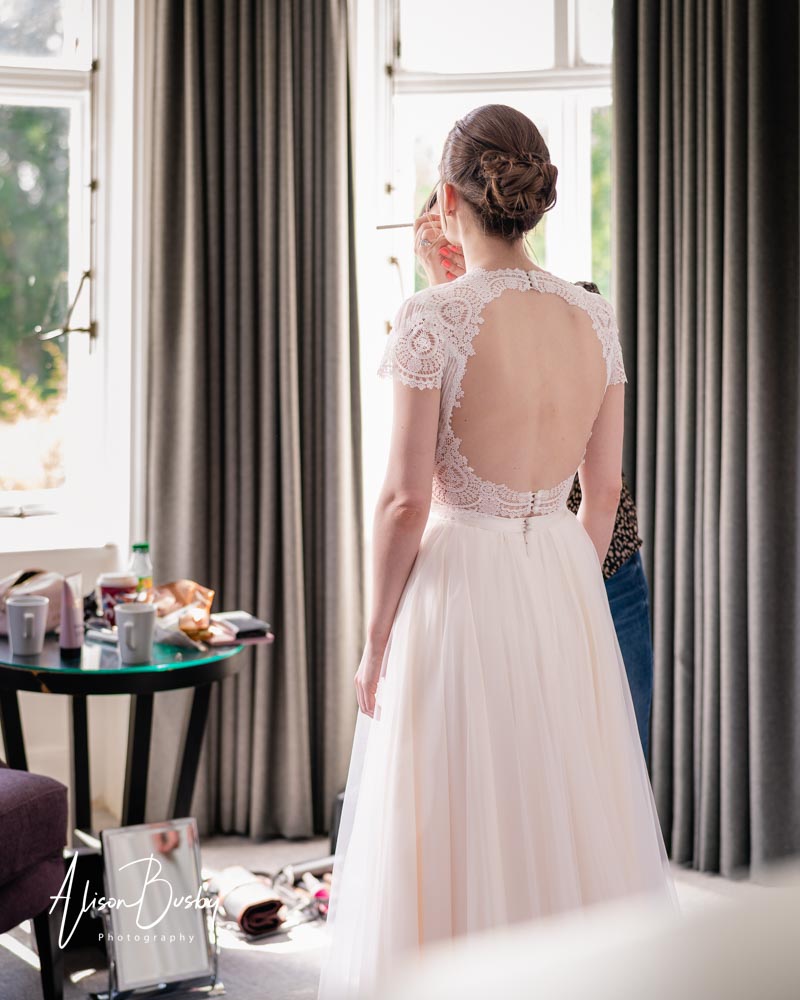
In my career as a wedding photographer, I can only think of a handful of weddings in which the bride was actually ready for portraits before I had to go. I think it’s a shame to capture all the bridal prep and not have any pics of the finished look.
It’s just a small part of planning a wedding but it can make a big difference to the last photos you have as a single person.
6. Allow an extra 20 minutes for getting your dress on
Continuing from the last point, if there are hook and loop-type buttons involved, please add another 20 minutes to getting your dress on. You have no idea how many red-faced mothers and bridesmaids I’ve photographed struggling with (and sometimes breaking) those loops.

7. Delegate one of your bridesmaids to keep the bridal prep area clean and tidy
Here’s a fairly typical scene for bridal prep, particularly in a hotel room. Towels, underwear, carrier bags, shoes, clothing, suitcases, makeup, pretty-much strewn everywhere.

Sometimes, it’s virtually impossible to clear a space because the room’s too small or there are too many people trying to get ready. But usually, there’s some kind of clean-up you can do – even if it’s just stuffing it all in the wardrobe or in the bathroom.
It’s just a tiny part of planning a wedding but it can make a real difference to the way your bridal prep photos will look and all it takes is a bit of delegation on your part.
8. Tell guests you’re having an unplugged wedding ceremony
I often think that mobile phones have created a world in which even real events are experienced virtually.
I mean, tell me you haven’t been to a concert in the last 15 years and seen at least half the audience watching the performance on a back of a phone (while recording it) rather than immersing themselves in the ambience and experience of actually being at the concert.
The fact that guests physically attending your wedding choose to experience the ceremony through the screen of a tiny mobile device wouldn’t be a big deal if they never stepped into the aisle, held their phone in the air or popped up in the background of a crucial shot. But of course, they do.
Not all and not always. But enough times to get a mention in this blog.
And here’s a case in point, twice in the same ceremony.
First, I’ve got a guest’s arm and the strap of a Canon DSLR sticking out of the bride’s head as she walks down the aisle.
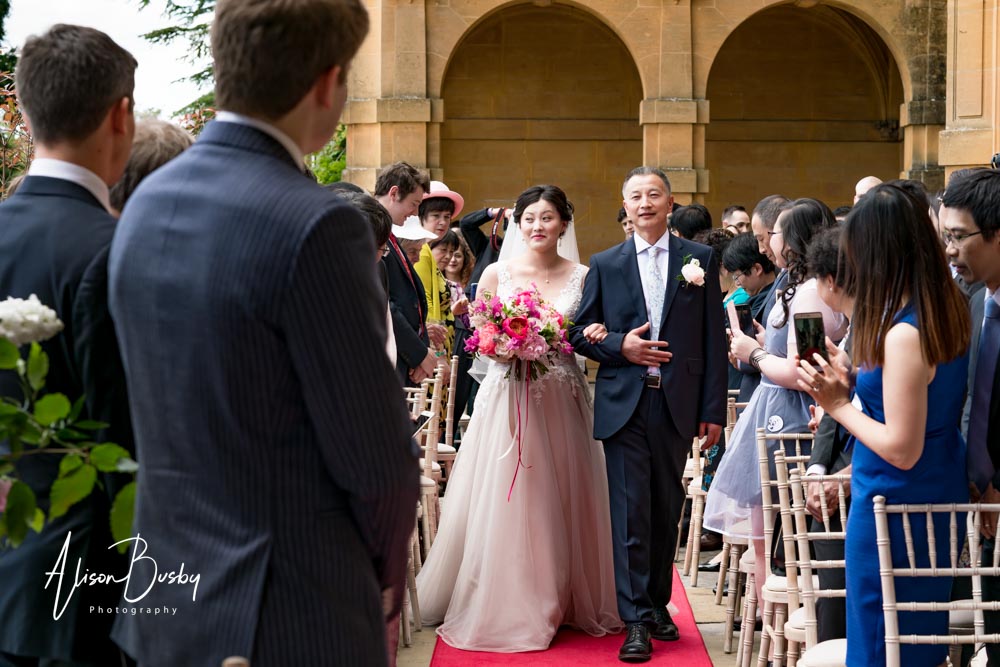
Then, on the way out, there are two guests standing on the aisle in front of the newlyweds as they leave the ceremony.

I can tell you with the first shot, that most photographers would say ‘you can edit that guy out’. And I would edit him out of that shot. But not the other 10 or 12 shots he was spoiling – at least, not free of charge.
As for the second shot, there’s no removing those people, not even with Photoshop’s new regenerative AI tools.
At this particular wedding, there’s a good chance that no one would have paid attention to any request to turn off mobiles or any other cameras but I have seen it work at other weddings. If you think about it as you’re planning a wedding, it can definitely help the wedding photographer do a better job.
9. Don’t sacrifice your portrait session
If you booked your wedding photographer because you love their romantic couple shots, please don’t end the session early because you or your spouse can’t wait to have a drink. Ask someone in your wedding party to bring you a drink.
When you’re planning a wedding, this is one of those small tasks that’s easy to delegate to a member of your bridal party. You’ve just got to think about it ahead of time.
Equally, if you’re feeling a bit overwhelmed by the day, take a few minutes away from the wedding by yourselves, rather than cancelling the couple shots altogether.

I’ve had both these things happen at weddings and unfortunately, all of the couples concerned have been disappointed when they later realised, they didn’t have many (or any) portraits.
When I’m photographing a wedding, I’m looking at your timings for the day and I’m working out the best time to fit in the photography you’ve requested without having a major impact on the day.
It’s not a random decision – and it’s also based on light – which is why it doesn’t always work if you say, ‘can we do sunset portraits later instead?’
10. Be impulsive
Continuing from the last point…
This only happens on one day in your life (hopefully). And you’ll never have another opportunity to be photographed in this beautiful place wearing that beautiful dress.
So, when your wedding photographer says, ‘let’s go outside for some great sunset portraits,’ or ‘let’s jump in the car and drive down to a fabulous field of rape to take photos,’ go with it, please.
Your friends and family came to your wedding because they love you and want to be part of your day not because they want to manipulate your time; they’ll be there when you get back.
11. Ask the venue to put your wedding cake in the middle of the room
An odd thing that happens all the time at weddings is that the venue will set up a table for your wedding cake next to a wall. Often a wall with a fire extinguisher or a fire exit sign proudly on display. Sure, I can usually edit out the sign but editing out the wall shadows from the flash is more difficult and not part of most standard wedding photography packages.
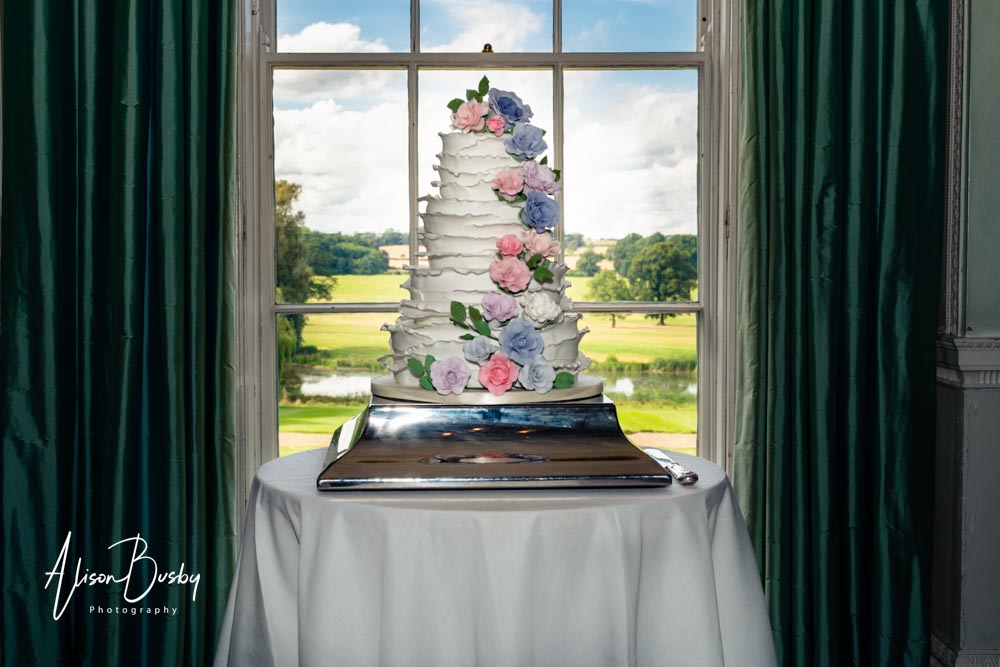
Unless your cake has got this view behind it, I’d strongly recommend when you’re going through the final stages of planning a wedding to ask your venue to put the cake on a table in the middle of the dancefloor. Obviously, get it moved before the first dance.
12. Book an engagement shoot if you’re anxious about being photographed

Doesn’t that sound like the worst suggestion ever!
But as with many irrational fears, the key to overcoming the fear is a gradual exposure to the object of that fear. And the great thing about an engagement shoot is that there won’t be 100 people watching you.
If you are a bit worried about being photographed on your wedding day, you might find my blog on getting over photo anxiety a useful read.
13. Don’t ask for a desaturated look to your photos
When you’re planning a wedding, you’re probably not thinking about how you’ll view the photography in 10 years’ time but I’d urge you to reconsider if you find photos processed like the one below appealing right now.

Some people call it a fine art look, others call it light and airy. You may also hear it called cinematic or bleached film. In practise, colours are largely desaturated and overexposed, although blacks tend to be made darker to add contrast.
The example I’ve used above has a sage green appearance to it but you’ll also see desaturated processing with peach toning, browns, orange and gold.
As a photo effect, a desaturated look works best on photos shot in natural light at wide apertures. Ironically, if your photographs are correctly exposed and have a good dynamic range, the desaturated effect doesn’t tend to work that well.
It also won’t give you consistent results in all lighting conditions. For example, the image below has had the same sage green effect applied as the one above but you can see that the colour of the skin and the dress is awful and would need a fair bit of adjustment to make those colours look correct.

Now compare the desaturated processing to processing using natural colours. In the next two examples, I’m showing desaturated editing on the left and clean natural processing on the right.


You can see in the photo on the right above, that the white of the dress is not massively dissimilar to the photo taken outside (on the right), despite the different ambient lighting.
The whole desaturated look is quite fashionable at the moment. But it won’t be forever and in 10 years’ time when you no longer love the effect, you won’t be able to reprocess your photos to natural-looking colours.
After that amount of time, it’s also unlikely your photographer will still have the original files and even if they have, they won’t reprocess your album free of charge. You can read more about photo processing and wedding photography styles in my recent blog.
Over to you…
As with everything related to planning a wedding – especially your wedding, you must decide what’s most important to you. What I hope you’ve got out of this post is an understanding of how some of the decisions you make can really boost the results of your photography.
I’m a wedding photographer based on the Buckinghamshire and Oxfordshire border. I cover weddings in Bucks, Oxford and Berkshire, and some beyond. You find examples of my work in Bucks by visiting my Buckinghamshire wedding photographer page.
If you’re planning a wedding for this year or next and would like to get in touch, use this link check my availability for your wedding date.
If planning a wedding is not your thing and you’d like to hand over the reins to someone more experienced, take a look at my blog about the benefits of booking a wedding planner.
You can see more examples of my work here as a wedding photographer.