

With the advent of digital photography, most of us know someone that’s good with a camera so it may be tempting to ask a friend or a graduate photographer to shoot your wedding rather than pay what seems a high price for a professional wedding photographer.
And why not? We all had to start somewhere.
I for one was invited to photograph my first wedding because the bride loved my live music photography. And most of my friends in the industry have similar stories and we all survived to tell the tale.
But what of the brides? Would they use an amateur photographer again if they had their time over? The truth is, I don’t know but I do know that in spite of planning the hell out of my first few weddings, I made mistakes that affected the quality and, subsequently, the number of photos I was able to deliver to my couples. So if you are thinking of using a friend or a graduate photographer to shoot your wedding, here are a few things worth knowing.
The light will change for every part of your wedding
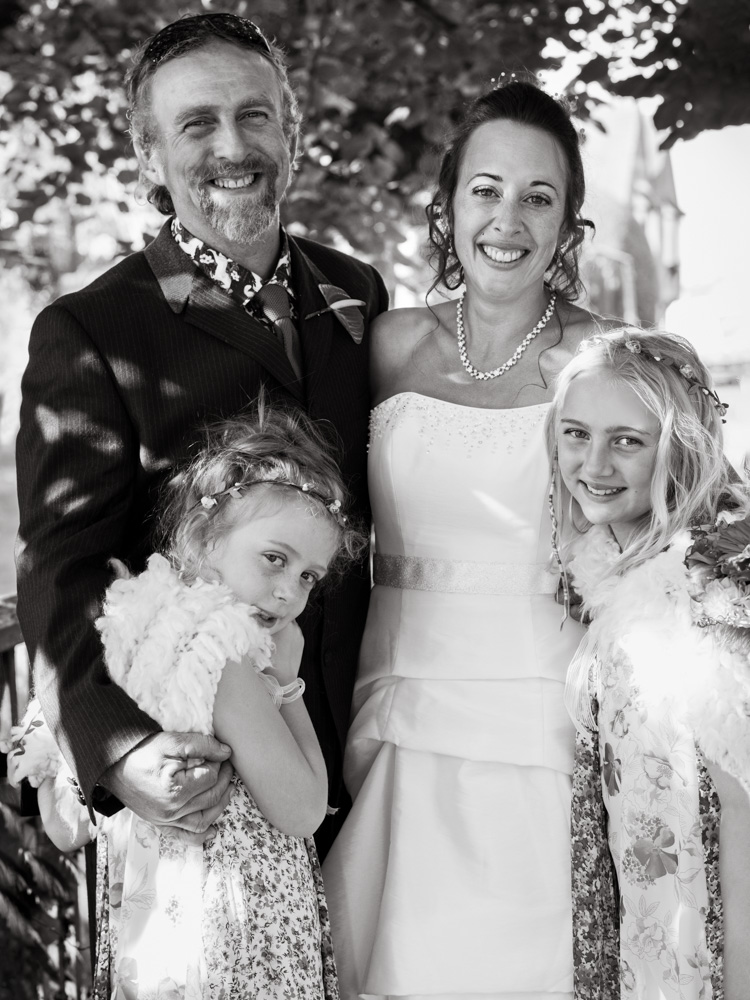
The biggest challenge you face as a wedding photographer is working effectively with rapidly changing lighting conditions as you move from one situation to the next. You need to be an expert shooter in low light, direct sunlight, rain, artificial light and with flash because all of those conditions could prevail during the course of a full day’s wedding photography.
You also need to be able to see and respond in-the-moment to problems like hot spots and blown highlights. In case you don’t know, blown highlights are over exposed parts of an image; these are parts of an image that cannot be recovered in post production. If it happens on a major section of a subject’s face or exposed parts of their skin, you’re only real hope is that you can crop parts of other similarly lit images and try to blend them in Photoshop.
But let’s face it – what are the chances of you having good photo editing skills if you can’t see the problem when you’re shooting in the first place!
In this photo above from my first wedding, although the family’s engagement with me is quite nice, I wouldn’t win any award for camera craft. It looks okay in black and white but in colour it’s perfectly clear that the background is horribly overexposed; the groom’s hand is clearly not relaxed and of course I chopped off the bridesmaid’s hand to-boot. At the time, I was only used to shooting in low light (that’s music for you) so where weddings were concerned I was still an amateur photographer.
In addition, because I placed my bride and groom under dappled light for a lot of my photos, I rendered most of the images from this part of the wedding unusable because of blown highlights on faces and bodies. Today, whilst I might still shoot under those trees, I now have the experience to expose wedding photos correctly – there’s no real substitute for experience.
Luckily for me, I was able to enlist the free support of another wedding photographer for my first few weddings. Having a professional with me didn’t make my photography instantly better but it did help to ensure we got some coverage of the whole day.
Directing people takes skill that an amateur photographer is unlikely to have

One of the things that frightens people most in photography is giving direction to a subject on how to stand, where to look and what to do with hands, etc. For the photographer that’s mostly about gaining confidence and practice. Where weddings are concerned you can come unstuck as an amateur photographer, even if you’ve had some experience of photographing models.
A wedding photography course can provide some practice and possibly help with confidence too but very little in reality. And of course, it won’t be free. It’s also important to remember that most brides and grooms are not models, whereas on wedding photography courses, they generally are. This last point is particularly important because unlike models, brides and particularly grooms are quite often uncomfortable in front of a camera; it’s our job as photographers to make them feel relaxed – not easy, if you don’t feel relaxed yourself.
What’s more, a lot of guests don’t enjoy the whole group photo experience and won’t always behave. So, if you’re not fairly forthright in managing the process, it’s really easy to lose control and run out of time.
Nothing kills creativity like fear for an amateur or graduate photographer
My biggest worry for my first wedding (and several after that) was not so much the lighting or the direction of my subjects – although it should have been – but more about standing in front of my couple and forgetting all my ideas for shots. As it turned out, although I was nervous, my idea production was mostly okay; it was just some of my execution that was a bit off.
Ultimately, if you do need to ask a friend or a graduate photographer to shoot your wedding because you can’t afford anything else – well, that’s what you’ve got to do.
If you’re doing it for any other reason, please consider these few realities:
- The wedding photos of an amateur photographer will not be of the same quality as an experienced photographer
- Some moments from your wedding will be missed or lost through inexperience
- Some errors cannot be fixed in post processing
- A graduate photographer is not a cheap version of a professional
- Your wedding photos are all you will have left of your wedding day
If you’re thinking of using an amateur photographer to save money, why not ask me for information on seasonal deals available through Alison Busby Photography and check my availability for your wedding date.
Visit my wedding photos gallery to see more examples of my work.
You can also follow me on Facebook, Instagram for my latest news and offers.